 Same Day Dispatch on Engraved Pens
 Free UK Tracked Delivery


A product has been added to the basket
What to Look Out for When Buying a Fountain Pen
What to Look Out for When Buying a Fountain Pen
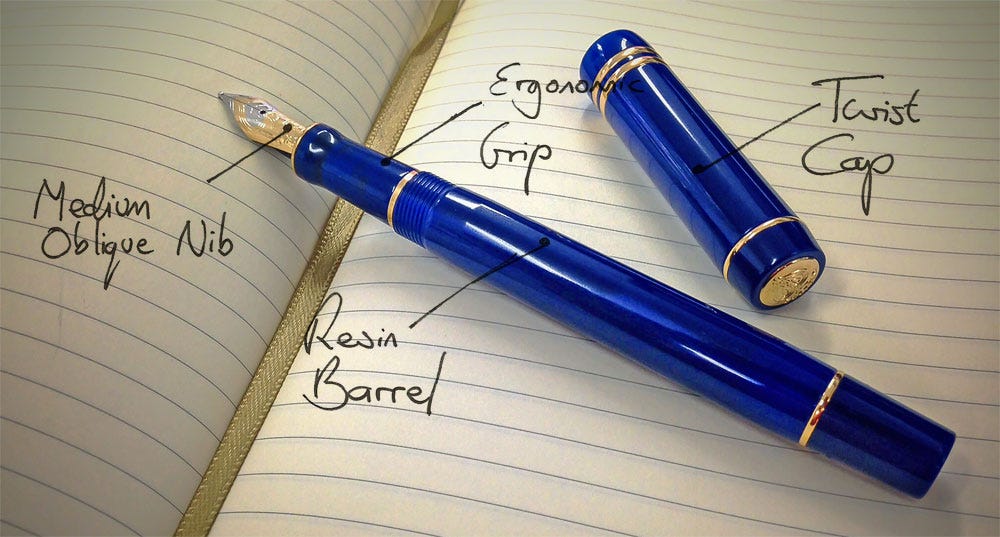
Fountain pens offer a smooth and luxurious writing experience, adding personality to every stroke you make. Finding the right fountain pen isn't so easy, as there is a vast array of options and choices (do you want a fine or medium nib? a converter or ink cartidge?). Follow our fountain pen buyers guide below, and you will be sure to find the right pen partner.

Nib Material
- Stainless Steel: strong, sturdy inexpensive to replace. Great for everyday use and suitable for children
- Iridium Tip: reinforces stainless steel on higher quality pens
- Solid Gold: a practical luxury. Gradually moulds to your writing style over time
Nib Width
There are many variations of nib width, but the most popular are below:
- Extra Fine: very thin writing line. Especially popular for drawing or in Far East for writing Chinese/Japanese characters
- Fine: popular for drawing, and suitable for people with small handwriting
- Medium: most popular. Suitable for most purposes and standard on most pens
- Broad: best for large handwriting; less economical with ink
Different nib widths can vary across the different brands. For example a Lamy extra fine nib is finer than a Waterman extra fine. See our visual comparison of different nib widths across the different brands.
Cut
- Standard: produces one consistent line thickness
- Italic: thin vertical lines and thick horizontals. Creates the variation found in calligraphy
- Oblique: Allows writer to hold pen from below the line. This makes the reverse oblique popular with left-handers as it prevents smudging
Replacement Nibs
- Whole front end: more expensive, but quick and easy. Great for keeping multiple nibs to hand
- Nib only: nib can be replaced independently of the grip shell. Pen must be flushed beforehand to avoid mess

- Material: plastic, metal or rubber. Purely a matter of preference so try out a friend’s pen and see what you prefer
- Shape: ridged or shaped grip sections can help provide a better pruchase on the grip section while writing. Ergonomic grip sections are perfect for new writers and people who struggle to hold a pen correctly.

- Cartridge: quick, clean, convenient, and perfect for pencil cases. Slightly more expensive due to plastic wastage
- Converter: allows use bottled inks, which are available in much more variantion of colour and finish than cartridges. Not very portable
- Reservoir: rare in modern pens. Allows for infrequent refills due to large capacity, but maintenance and repairs can be difficult and costly. For a great range of pens with inbuilt fillers, see TWSBI

You can make a pen out of anything – glass, wood, stone, coral, even dinosaur bone. These are just the most common materials used in factory-produced pens.
- Base metal: Suitable for engraving. Brass and stainless steel are most popular, with some aluminium pens also available. Often lacquered for colour
- Sterling Silver: engraves beautifully, but may be too heavy for some users. Otto Hutt are specialists in silver pens
- Plastic: lightweight and generally inexpensive. ABS plastic chosen for Lamy Safari is extremely durable
- Resin / Celluloid: limitless variations on colour and pattern - see Visconti and Conklin for exceptional examples. Acrylic resin is brittle at lower thicknesses and so normally produces fatter pens.
Barrel Width
As a vague rule of thumb, pens get fatter as they get more expensive - consider the 13mm Parker Premier and the 14mm Laban Mento.
The average and most popular barrel diameter measures 9-11mm, whilst the 6mm Ohto Slimline is ideal for tucking inside a journal or bag.

Clip
Fashion meets function. Consider Parker’s iconic arrow, or the Laban 1 set with Swarovski crystals. Brands such as Otto Hutt use spring-loaded clips which clamp down to prevent the pen getting lost.
Cap
If your pen’s only to be used for the occasional signature, consider Platinum’s ‘Slip and Seal’ cap which prevents ink drying for up to two years without use.
Closure
- Screw: a traditional feature which also helps to contain leaks. Recommended for travelling writers
- Click-on: quick and convenient for daily users
Rollerball vs. Ballpoint Pens: A comparison July 17, 2013
Refill Guide September 2, 2015


Fountain Pen Nib Width Comparison August 4, 2015

Lead Sizes for Mechanical Pencils October 19, 2015
Cutting Edge - Unconventional Pen Materials April 18, 2024
Egg-straordinary Stationery March 21, 2024
LAMY safari's Spring Awakening April 26, 2023

Flair for Fashion March 8, 2023
Comments
Fountain pen collecting is a hobby enjoyed by people all over the world. This hobby began almost as soon the first fountain pen was made. Once people started writing with this fine writing instruments, people immediately saw the beauty that these fine pens possessed and fountain pen collecting began.
Fountain pen collecting is a hobby enjoyed by people all over the world. This hobby began almost as soon the first fountain pen was made. Once people started writing with this fine writing instruments, people immediately saw the beauty that these fine pens possessed and fountain pen collecting began.